2 590 Ft – 20 990 FtÁrtartomány: 2 590 Ft - 20 990 Ft
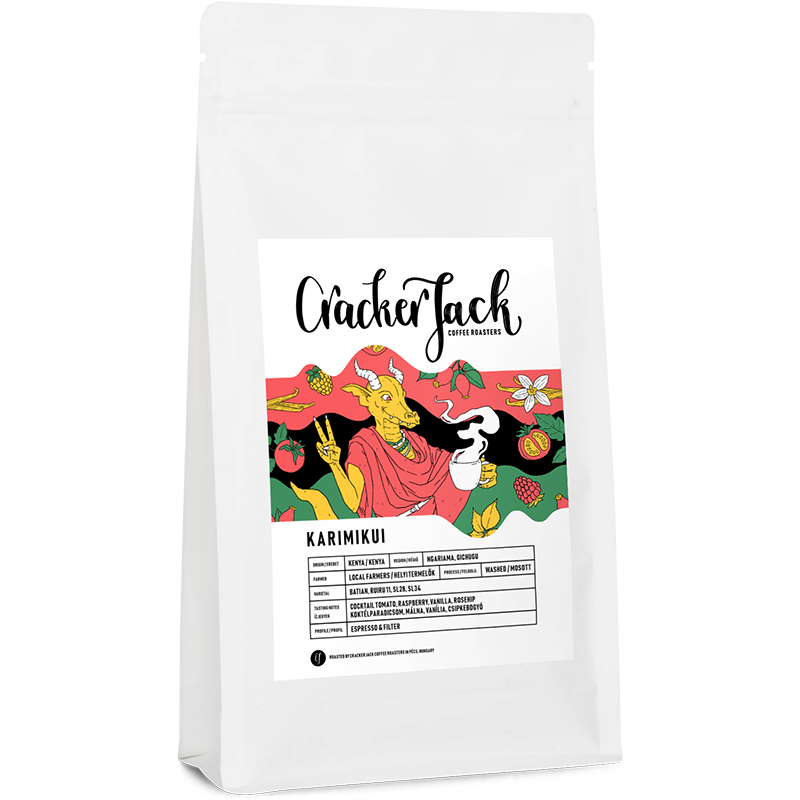
ORIGIN Kenya
REGION Ngariama, Gichugu
FARMER local farmers
PROCESS washed
VARIETAL Batian, Ruiru 11, SL28, SL34
ÍZJEGYEK koktélparadicsom, málna, vanília, csipkebogyó
PROFILE Espresso & filter
This Kenyan lot from the Karimikui washing station perfectly showcases why coffees from this region are among the most celebrated specialty coffees in the world. Grown on the volcanic slopes of Mount Kenya at altitudes of 1,700–1,900 meters above sea level, the Batian, Ruiru 11, SL28 and SL34 varieties bring a vibrant character and remarkable complexity to the cup. Thanks to the careful washed processing, this coffee delivers a bright acidity and exceptional clarity.
This AB lot Karimikui feldolgozó állomásról comes from Karimikui Factory, a well-known coffee factory that has been a part of the specialty coffee scene since its early days. Located in Ngairiama on the slopes of Mount Kenya, farmers delivering to Karimuki benefit from fertile volcanic soil and high altitude, which allows farmers to grow dense, sweet cherries. These factors result in high-quality beans with a distinctive flavor profile.
Karimikui Factory Rung’eto Farmers Cooperative Society (FCS). owned and operated by the Rung’eto Farmers SL28, SL34, Ruiru 11 és Batian At elevations of 1,700–1,900 meters above sea level, local farmers cultivate SL28, SL34, Ruiru 11, Batian varieties and deliver ripe cherries to the Karimikui factory. The factory was founded in 1953, making it one of the earliest established in the region.
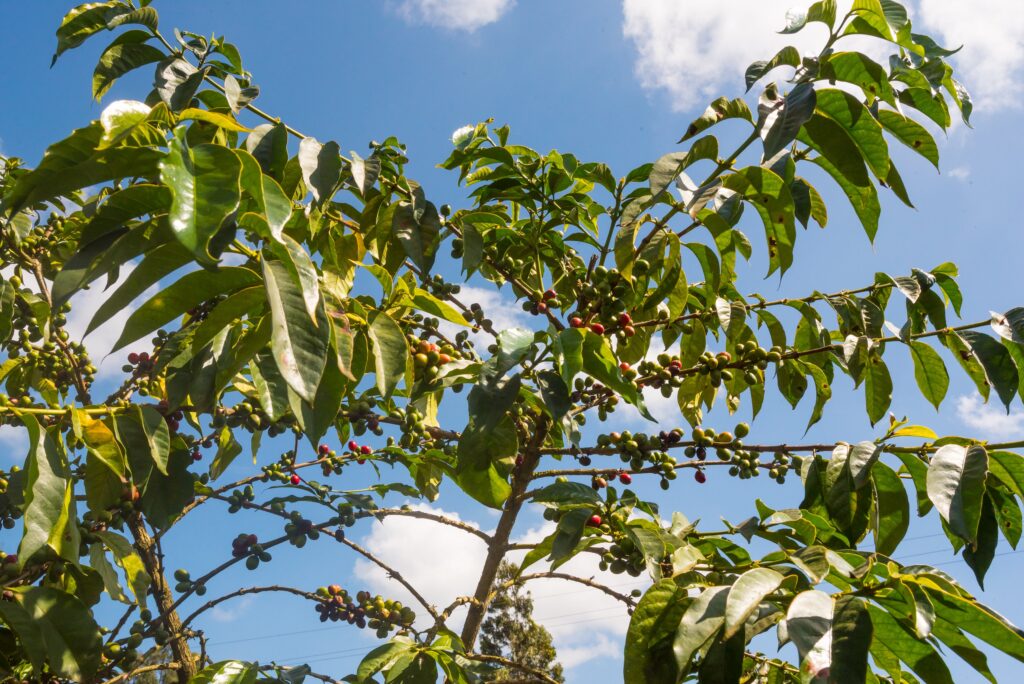
Farmers delivering to Karimikui factory cultivate primarily SL28, SL34, Batian és Ruiru 11 in small coffee gardens that are typically smaller than 1 hectare.
e ‘SL’ varieties are cultivars originally released by Scott Agricultural Laboratories (SAL) in the 1930s and 1940s. They soon became the go-to trees for many growers in Kenya due to their deep root structure, which allows them to maximize scarce water resources and flourish even without irrigation.
They are cultivated with a serious eye to sustainability and Good Agricultural Practices, with minimal enviromental impact where possible. Ruiru 11 is a newer variety known for its disease resistance and high yields. It also starts yielding fruit after just 2 years.
Smallholders selectively handpick ripe cherries and deliver them to Karimukui Factory. At intake, the Cherry Clerk oversees meticulous visual sorting and floating, accepting only dense, ripe cherries.
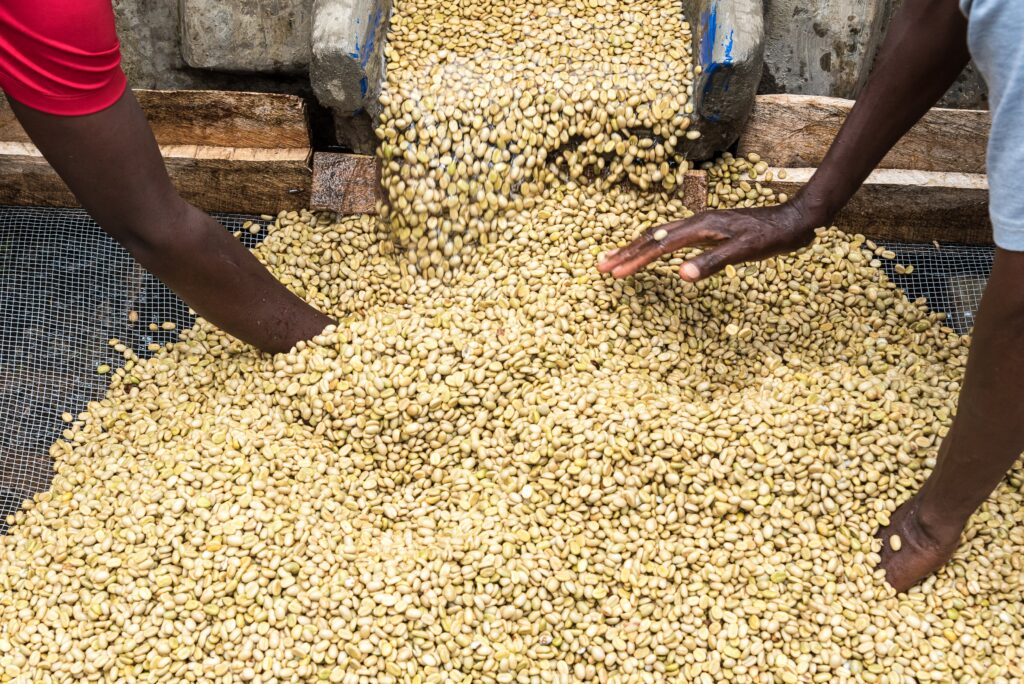
he cherry is then pulped and fermented for approximately 12 to 24 hours. Following fermentation, coffee is washed in clean water and soaked for 24 hours. This soaking stage is traditionally a way to structure post harvest processing during peak season, when there will be limited space available on drying beds. However, it has been posited that additional benefits derive from the soaking process, such as clarity in the cup and overall longevity of green coffee.
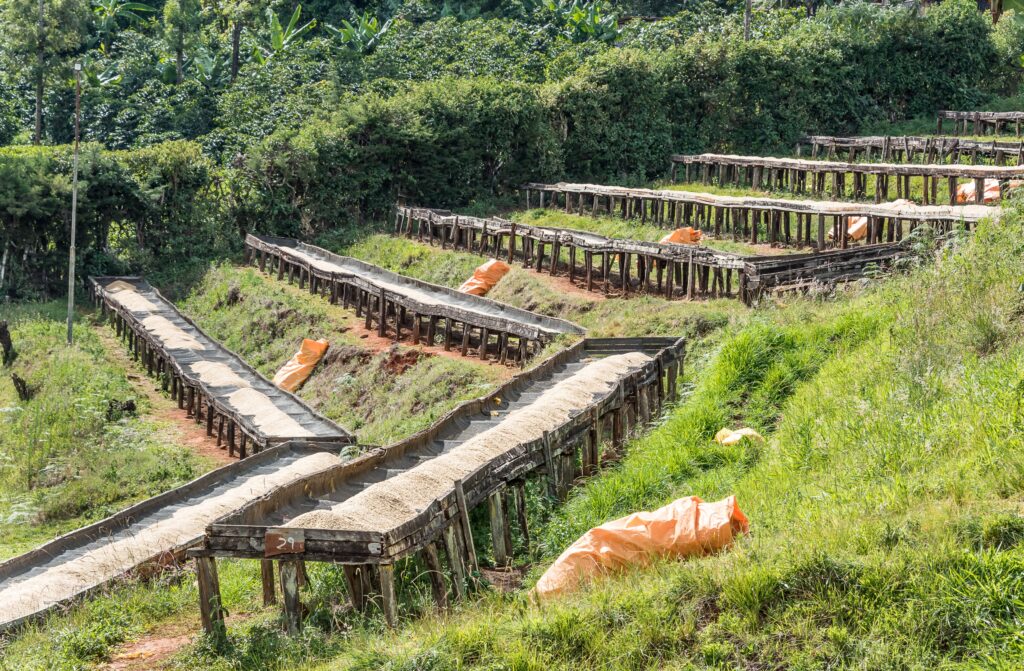
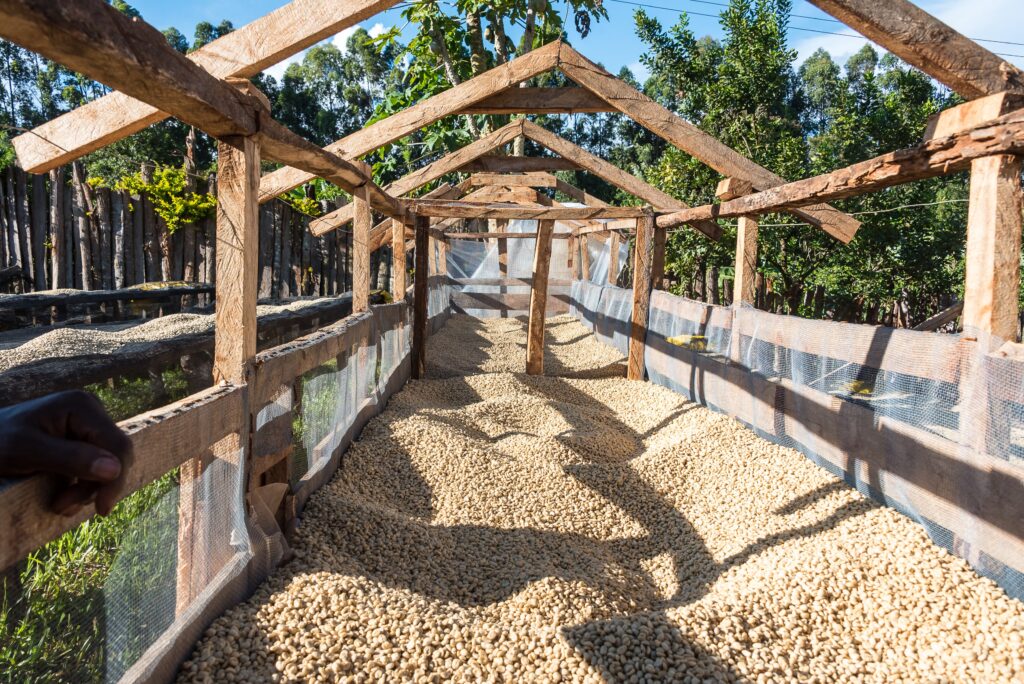
After soaking, the parchment is laid to dry on raised beds or in a solar drier. During the drying process, workers rake parchment frequently to ensure even drying. They cover drying parchment during the hottest time of day to maintain slow, even drying and at night, to shelter parchment from moisture. It takes approximately 7 to 21 days for parchment to dry. Once the drying is completed, the parchment is bagged, milled and ready to export.


Üzemeltető
814 Trade Kft.
7634 Pécs, Minda utca 10.
adószám: 32315107-2-02